
Is Frank Ocean Islamophobic?
An in-depth analysis of his lyrics in 'American Wedding' and 'Bad Religion'

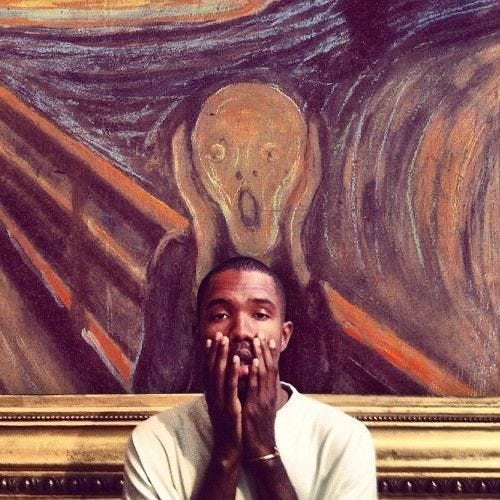
Frank Ocean is an accomplished singer-songwriter with 2 Grammys and a BRIT Award. With three albums, Frank’s lyrics have been hard-hitting and intimate for many listeners, cultivating a loyal fanbase. However, some of his lyrics have been criticised for mentioning Islam and Muslims in ways that some label as Islamophobic. For example, his song Bad Religion uses the Islamic phrase “Allahu Akbar”, which people view as sacred. There’s also a verse in American Wedding about the cultures of Muslim countries that’s often taken out of context. This article aims to dissect the lyrics of ‘American Wedding’ and ‘Bad Religion’, offering my own interpretation, providing context, and answering whether these allegations are substantiated in his lyrics.
Analysis of American Wedding
Many people say this song is about young love, rushing into things, and the insincerity of American/Western relationships, but I’ve interpreted the song completely differently. Let’s examine the lyrics first.
I took a walk with the palm trees
As the daylight fell
Sangria in a canteen
Talking to myself (I can’t remember)
This tattoo on my left hand
Is turning purple-ish blue
Daydreams of the romance
Daydreams of you (you)
The lyrics depict an older man taking advantage of a high school girl. While the song emphasises the girl’s youth, it does not explicitly state the man’s age. However, several details hint that he is significantly older. For example, the reference to “Sangria in a canteen” implies he is drinking alcohol. The legal drinking age in America is 21, which suggests the man is at least 21 or older, since he is drinking in a public space where underage drinking could easily be noticed.
Additionally, the man has a tattoo that is “turning purple-ish blue,” indicating that it is old and fading. Given that the legal age to obtain a tattoo without parental consent is 18, this further supports the idea that the man is older. Together, these details reinforce the power imbalance between the man and the girl.
My pretty woman in a ballgown
I’m Richard Gere in a tux
Getting married in a courthouse
Writing vows in a rush
Making out before the judge
With my teenage wife
Got a wedding band done
That I just might die with
The first 2 lines reference the iconic 1990 romantic comedy ‘Pretty Woman’. This is significant for two reasons. Firstly, referencing a well-known pop culture film helps the song resonate with an American audience. Secondly, the film itself represents a narrative of transformation. The female protagonist of the film, Julia, is a sex worker who dresses provocatively and in a “tacky” way. Later, through her relationship with the male love interest, played by Richard Gere, she is transformed into a refined and “respectable” woman.
In the context of the song, parallels can be drawn to the teenage girl who undergoes a similar transformation on her wedding day, as she replaces her school clothes with an elegant and womanly gown. The male POV imagines himself as Richard Gere, the man who “brings out the woman” in the girl. This interpretation becomes more unsettling when the song later refers to her as a “teenage wife.” The phrase exposes a contradiction within predatory thinking: the man simultaneously acknowledges the girl’s youth while justifying the relationship by framing her as mature enough to be his partner. This reflects a desire to exploit innocence and naivety, so that the man can mould the girl into the version of womanhood he desires.
M-R-S dot Kennedy
She signed her name in pen (oh)
In the fancy, fancy cursive (oh)
Then turned her term papers in (oh, oh)
A thesis on Islamic (oh)
Virgin brides and arranged marriage (ah, ah)
Hijabs and polygamist husbands
Those poor un-American girls
When it comes to suggesting the girl’s age, “fancy, fancy cursive” is a specific and subtle line compared to the other lyrics. It is reminiscent of primary school, when young children were trained to write in cursive to transition from pencil to pen. Then, in high school, students want their writing to be neat and pretty, and many write in cursive to achieve that. This detail reinforces the idea that the girl has not fully transitioned into adulthood.
Then, she turns her term papers in, which include a thesis on Islam and the prevalence of child marriages in some Muslim countries. There is a striking cognitive dissonance in the girl’s mind between her own situation and the grooming of these “un-American girls”, which can be common with victims of abuse and grooming. This is also a wider social commentary on the hypocrisy of American perspectives, which look down on other cultures as backwards, when they are guilty of committing the same sins. A context que that is missed when reading the lyrics on paper is how Frank Ocean mispronounces hijabs as “hee-jaybes” to show how Americans often butcher non-English words, and do not respect non-Western cultures, usually reducing them to oversimplified and disrespectful caricatures.
After school she ran to me
Jumped in my 5.0
This is the home of the brave, land of the free
But your parents still didn’t know (oh)
The girl’s youthfulness is exemplified by the line, “after school she ran to me,” which mirrors how children run home from school to their parents, reinforcing her childishness. The male perspective suggests a clear age difference: he is waiting in the car when she “jumped in my 5.0,” implying that he does not attend the school with her and is therefore older. The secrecy of their relationship further highlights its inappropriateness, as the girl’s “parents still don’t know.” This concealment suggests that the man is aware that the relationship is wrong, yet he continues it and deliberately hides it.
The line “this is the home of the brave, land of the free” is particularly poignant, especially as it precedes the revelation that the girl’s parents are unaware of the relationship. Although the couple have taken it as far as marriage, they do not want to disclose the relationship, undermining the idea of bravery implied by the lyric. This patriotic phrase, commonly associated with American freedom, is used ironically, as it contradicts the girl’s reality. Rather than being “free,” she is locked in a prison of a marriage she may not fully understand or choose independently. In this context, marriage functions as a form of restriction rather than liberation. The verse comes off as satirical, exposing the gap between America’s idealised self-image and the lack of freedom experienced by its vulnerable individuals.
Analysis of Bad Religion
The song starts with Frank Ocean calling out to his taxi driver, asking him to serve him as a “shrink”, a slang term for a therapist, intending to talk about his problems to a stranger, as he has no one else to turn to. He tells the driver to “leave the meter runnin”, showing that he wants to use this car ride as an opportunity to vent rather than getting to a destination.
It’s rush hour
So take the streets if you wanna
Just outrun the demons, could you?
He said, “Allahu akbar”
I told him, “Don’t curse me”
“Bo Bo, you need prayer”
I guess it couldn’t hurt me
If it brings me to my knees
It’s a bad religion, ooh
Ooh, ooh, this unrequited love
To me, it’s nothin’ but a one-man cult
And cyanide in my Styrofoam cup
I can never make him love me
Never make him love me
The phrase “Allahu Akbar” follows Frank Ocean telling the taxi driver to “outrun the demons”, suggesting that the driver is protecting himself from the curse of demons in a literal sense, while also declaring that God, “Allah” in Arabic, is greater than these “demons” or the problems Frank is facing, in a metaphorical sense. The literal meaning of “Allahu Akbar” is “God is the Greatest”. However, this phrase proves to be a double-edged sword when Frank, in turn, thinks the taxi driver is cursing him, perhaps because he is unfamiliar with it. It can also reveal something deeper, such as a subconscious bias within the song’s POV. The phrase is in Arabic, which has been demonised by American media, and “Allahu Akbar” has unfortunately become commonly associated with terrorist activities. Many Americans don’t know what it means or what it is originally used for, but associate it with something evil, which is why, in this song, Frank thinks it is a curse.
Then the driver clarifies that “Bobo, you need prayer.” In the Sierra Leonean language of Krio, where over three-quarters of the population is Muslim, bobo can mean ‘boy,’ which the driver uses as a term of endearment, and it can allude to the fourth track on the song’s album, titled ‘Sierra Leone.’ Bobo is also a Hispanic diaspora slang term for “dummy” and can be used affectionately to describe someone as gullible, reflecting Frank’s naivety in matters of love. Either way, the taxi driver is presumably Muslim and of immigrant background, representative of how immigrants make up a large proportion of taxi drivers in the U.S. The driver is advising Frank based on his own experiences, lifestyle and way of problem-solving. Frank agrees that perhaps he could use a little prayer. In turn, Frank connects this religious lifestyle to love and ponders if it brings him to his knees out of despair, then it must be a bad religion. He concludes that unrequited love isn’t a mass-organised religion but a one-man cult, in which Frank devotes himself solely to the man he loves, getting nothing in return.
There has been discussion that the inclusion of the Islamic phrase “Allahu Akbar” is disrespectful to Muslims. Personally, when I first listened to Bad Religion, a long time ago, when I was less mature, I also had a visceral reaction to the lyrics and felt they were offensive; this was the one song of Frank’s that I actively avoided listening to. That’s to say, it’s not abnormal for a Muslim to feel put off by these lyrics. Yet, the question of whether Islamic phrases should be included in music is an entirely different conversation to be had, which I will not explore in this article.
Conclusion
It’s evident that Frank Ocean is a storyteller through his music. Therefore, when gauging the meaning of his lyrics, you should treat the verses as pieces of a puzzle. It’s unfair to take his lyrics out of the context of the song and judge them on their own. From this analysis, we find that rather than perpetuating Islamophobia, Frank offers social commentary on how the West views Islam and Muslim countries as barbaric, while putting itself on a pedestal.